Each spring, college basketball takes over in a way few other sporting events tend to do. For a few weeks, the NCAA tournament, better known as March Madness, becomes a constant presence across televisions, phones and conversations. Games stack back-to-back, brackets are at risk of falling apart and attention shifts towards who will come out on top.
March Madness is the name given to the NCAA Division I men’s and women’s basketball tournaments, which take place each year from March into early April. The tournaments include 68 teams, made up of conference champions earning automatic placement and additional teams selected by a committee. Once the teams are set, they are placed into a bracket and seeded within four regions. From there, the format is simple and unforgiving. It is single elimination: one loss, and a team’s season is over. Because of this, every game carries weight from the very beginning, with little room for recovery.
The tournament moves through a set structure that has become familiar even to casual viewers: the First Round, Second Round, Sweet Sixteen, Elite Eight, Final Four, and the national championship. With each round, the number of teams shrinks and the pressure builds.
The tournament itself has changed significantly over the years. When the NCAA men’s tournament began in 1939, it included only eight teams. As college basketball grew in popularity, so did the tournament, eventually expanding to its current 68 team format in 2011. The women’s tournament, which officially began in 1982, followed a similar path of expansion. In 2022, it was formally brought under the March Madness branding and expanded to 68 teams as well.
Part of what keeps March Madness so widely followed is how unpredictable it can be. Lower-seeded teams, often overlooked at the start, sometimes advance further than expected by defeating higher-ranked opponents. These upsets are a natural part of a single-elimination format where every game carries immediate consequence. A strong team can be eliminated in a single night, while another can build momentum quickly; it’s the perfect environment for a Cinderella story to emerge.
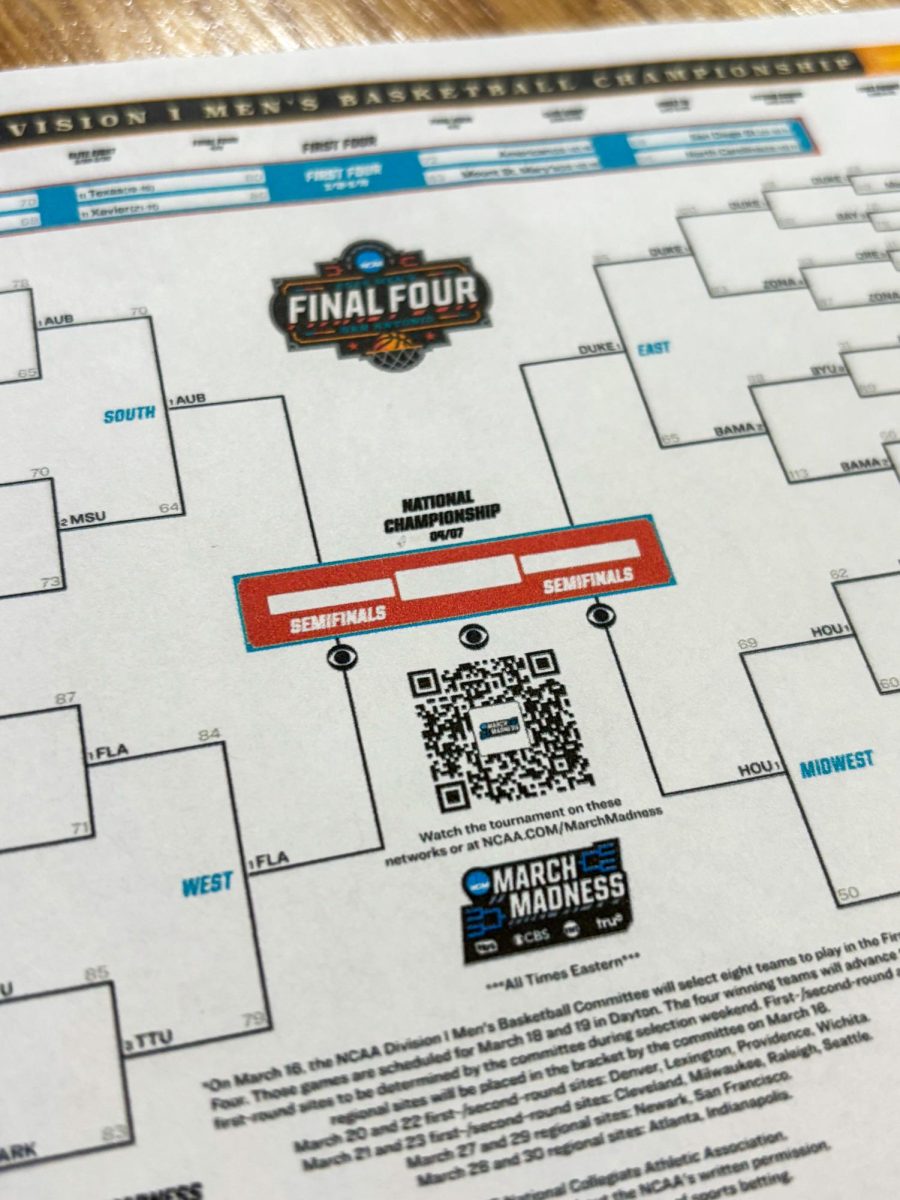
Beyond the games themselves, the tournament invites participation in a way few other sporting events do. Brackets allow fans to predict the outcome of each matchup before the tournament begins, turning the event into something interactive and letting fans feel closer to the games even if they are unable to go to any in person. This shared participation helps extend the tournament beyond the court and into everyday conversations and communities. The 2026 tournament is now underway, with early matchups already narrowing the field. As the tournament continues and the bracket narrows, one question remains at the center of it all: which team are you rooting for?
Ed Tortorelli is a Dakota Student General Reporter. He can be reached at [email protected].